ByJohn A
How Much Can Restaurants Save by Switching to Rechargeable Tea Light Candles?
Restaurants can reduce recurring candle expenses by replacing disposable tea lights with rechargeable alternatives. The actual savings depend on the number of tables, frequency of use, battery performance, electricity consumption, and replacement rate of traditional candles. Although rechargeable options require an initial investment, they can reduce repeat purchases, simplify table preparation, and provide consistent lighting for daily service.
For restaurants that use candles during lunch, dinner, private events, or special occasions, the savings extend beyond purchasing fewer disposable products. Rechargeable tea light candles can also reduce waste, limit the need for candle storage, and help staff prepare tables more efficiently. Candles Recharge offers rechargeable lighting options for hospitality settings where attractive presentation and practical operation need to work together.
Why Traditional Tea Lights Can Become an Ongoing Expense
Traditional tea lights are affordable individually, but their recurring use can make them a regular operating expense. Restaurants often need candles for dining tables, outdoor seating, reception areas, private dining rooms, and decorative displays. Each candle burns down and must be replaced before the next service.
The purchasing cycle also creates additional work. Staff members need to check supplies, remove used candles, replenish table settings, and store replacement stock. Busy venues may need to maintain extra inventory to prevent shortages during full-service periods or special events.
Disposable candles also create waste. Their metal cups, remaining wax, and packaging require disposal, adding to the volume of materials a restaurant handles. The amount of waste varies by candle design and local recycling facilities.
These expenses are not limited to the purchase price of an individual candle. Frequent replacement, stock management, and preparation work all contribute to the overall cost of maintaining table lighting.
How Rechargeable Lighting Changes Restaurant Operating Costs
Rechargeable lighting replaces the repeated purchase of disposable candles with reusable units that can be charged and returned to service. Instead of throwing away a candle after its fuel is exhausted, employees recharge the unit according to the manufacturer’s instructions.
The main financial benefit comes from reducing recurring purchases. Once a restaurant has enough units to cover its tables and maintain a practical rotation, the same lights can serve across many dining sessions, provided their batteries and components remain in good condition.
The initial purchase still matters. Rechargeable units cost more upfront than basic disposable tea lights in many cases, and charging equipment may be needed. Batteries also have a limited service life, so replacement and eventual disposal should be included in a realistic cost assessment.
For restaurants, the strongest case for switching comes from frequent candle use. A venue that lights nearly every table during every dinner service has more opportunities to benefit than a restaurant that uses candles only for occasional celebrations.
Calculating the Savings for Your Restaurant
A useful comparison should consider the total cost of using disposable candles against the total cost of operating rechargeable alternatives over the same period of use.
Start by recording how many disposable candles the restaurant uses during a normal service, how frequently the dining room operates, and how often candles need replacing. Then compare those figures with the capacity, charging requirements, and expected service life of the rechargeable units being considered.
A practical calculation includes:
- Disposable candle expenses: Purchases of replacement candles and related consumables.
- Rechargeable equipment expenses: Initial unit purchases, charging accessories, and battery replacements.
- Operating expenses: Electricity used for charging and any additional maintenance.
- Replacement and waste expenses: Damaged units, worn batteries, and disposal requirements.
The calculation can be expressed as:
Net savings = Disposable candle expenses avoided − Rechargeable system expenses
For a more complete comparison, include any measurable reduction in staff time spent handling replacements. Avoid counting the same labor benefit twice, and use actual operating records instead of assuming that every task will take less time.
Restaurants should also distinguish between cash savings and operational benefits. Reduced storage requirements and simpler replenishment routines may be valuable even when they do not immediately appear as direct financial savings.
The Restaurant Settings That Benefit Most
The value of reusable candle lighting depends partly on where and how the lights are used. Dining spaces with regular candle use are generally better suited to a rechargeable system than areas where decorative lighting is rarely switched on.
Full-service dining rooms are a natural starting point. Tables that receive candlelight during every evening service generate repeated demand for replacements. Rechargeable units can remain in circulation through a routine of charging, cleaning, inspection, and redistribution.
Outdoor dining areas may also benefit from reusable lighting, particularly where candles are exposed to breezes that can extinguish open flames. Restaurants should select products specifically rated for their intended outdoor conditions, including moisture exposure and temperature limits. Not every rechargeable unit is suitable for uncovered patios.
Private dining rooms and event spaces often require coordinated table presentation. Rechargeable lights can be prepared in batches and positioned before guests arrive. This makes it easier to maintain a consistent appearance across larger tables and event layouts.
Restaurants should assess these areas separately rather than replacing every candle at once. Starting with the section that uses the most disposable candles provides a clearer picture of performance and helps staff adapt to the new routine.
Choosing the Right Rechargeable Lights for Hospitality Use
The purchase price alone does not determine value. Restaurants need lighting that can handle frequent use, routine cleaning, and the demands of service.
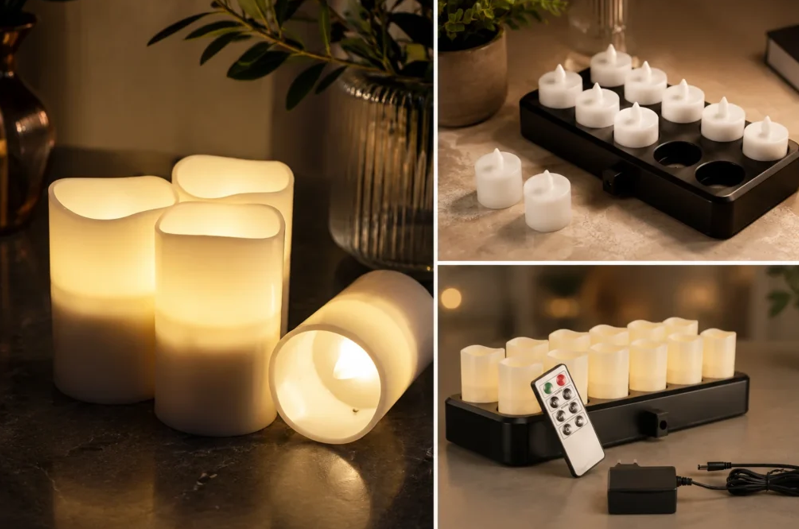
Tea light rechargeable candles are available in different sizes, finishes, brightness levels, and charging configurations. The best fit depends on the restaurant’s tableware, atmosphere, and daily operating procedures.
Look for these practical features:
- Reliable battery performance: Check the manufacturer’s stated operating time and charging specifications.
- Consistent appearance: Choose a light color and brightness that complement the restaurant’s intended ambience.
- Easy maintenance: Smooth surfaces and accessible components make routine cleaning simpler.
- Convenient charging: Charging trays or organized charging stations can help staff manage multiple units.
- Appropriate safety ratings: Verify suitability for the intended location, especially for outdoor dining or areas exposed to moisture.
Restaurants comparing electric tea lights rechargeable models should also examine how easily units can be charged and stored together. A disorganized charging setup can create unnecessary work, even when the lights themselves perform well.
Candles Recharge serves customers seeking rechargeable candle options for hospitality and other settings. Before selecting a product, restaurant managers should compare its specifications with their service requirements, including brightness, operating time, charging method, and durability.
Creating a Consistent Dining Atmosphere Without Open Flames
Lighting affects how guests experience a restaurant. A warm glow can make a table feel inviting, soften the appearance of a dining room, and complement the overall interior design. Reusable flameless lighting allows restaurants to maintain this effect without relying on an exposed flame at every table.
A rechargeable flameless candle can be particularly useful in venues where staff need predictable lighting across many tables. Some models offer adjustable brightness, while others focus on a simple, steady glow. The right choice depends on whether the restaurant prioritizes subtle background lighting, decorative table accents, or a more prominent candle effect.
Restaurants seeking rechargeable flameless candles with remote controls should confirm how the remote operates, which functions it supports, and how many lights it can control. These features can be useful for adjusting several tables at once, but compatibility and control range vary by product.
Flameless does not mean that every product is suitable for every environment. Charging equipment must be used correctly, batteries should be inspected for damage, and lights must be kept within their specified operating conditions. Rechargeable units also require appropriate end-of-life handling.
Making the Switch Without Disrupting Service
A gradual changeover can help restaurants assess performance before committing to a larger purchase. Begin with one dining area and establish a simple routine for collecting, charging, cleaning, and redistributing the lights.
Assign responsibility for checking battery levels and identifying damaged units. Keep charged lights organized separately from units waiting to be recharged, and maintain enough spare units to cover normal service needs.
Staff feedback is useful during this stage. Employees can identify issues such as lights that are difficult to switch on, charging stations that occupy too much space, or brightness levels that do not suit the dining room.
Track disposable candle purchases before and after the change. Record rechargeable unit failures, battery replacements, electricity use where practical, and any changes in preparation time. These records provide a more dependable basis for calculating savings than relying on estimates alone.
Restaurants should also retain a small number of alternative lighting options if particular tables, themed events, or service requirements call for a different presentation. The aim is to select a system that supports the venue’s needs rather than forcing every space into the same arrangement.
See also: How Can Lead Generation Help Businesses Attract Qualified Customers?
A Practical Investment in Everyday Restaurant Operations
Replacing disposable candles with reusable lighting can help restaurants reduce repeat purchases, manage supplies more efficiently, and maintain a consistent atmosphere across dining spaces. The greatest savings are generally found in venues that use candles frequently, have many tables to prepare, and can establish an effective charging and maintenance routine.
For restaurants planning to improve table presentation while controlling recurring supply expenses, Candles Recharge offers options worth considering. If you are reviewing your venue’s lighting requirements, get in touch with us to discuss suitable rechargeable candle options for your dining space. A well-planned switch can support attractive table settings while reducing dependence on disposable candles.
Before making a purchase, compare the full operating requirements rather than focusing only on the upfront price. Battery performance, product durability, charging convenience, and the restaurant’s actual usage patterns all affect the final result.