ByJohn A
Regenerative Split Flow Dryer: How No-Loss Adsorption Dryers Remove Moisture From Compressed Air
Moisture control is a critical part of compressed-air treatment, particularly where production equipment requires dry air with a controlled dew point. Refrigeration dryers remove moisture through cooling and condensation, while adsorption dryers use a desiccant material to capture water vapour directly from compressed air. A regenerative split flow dryer uses this adsorption principle with a regeneration arrangement designed to reduce the loss of compressed air normally associated with conventional purge-based systems. The split-flow configuration allows different portions of the compressed-air stream to support drying, regeneration, and cooling within the operating cycle.
Why Compressed Air Needs Deep Moisture Control
Atmospheric air naturally contains water vapour, and the concentration of moisture increases when air is compressed. If this moisture remains in the compressed-air system, it can condense as air temperature changes and create problems in pipelines, valves, instruments, pneumatic equipment, and production processes.
The required level of moisture removal depends on the application. Some systems can operate with the pressure dew point provided by a refrigeration dryer, while applications requiring much drier compressed air may need adsorption technology. A desiccant dryer can reduce moisture to a substantially lower dew point by adsorbing water vapour rather than relying primarily on condensation.
Moisture control helps support:
- Protection of downstream pneumatic equipment
- Reduced risk of condensation in air lines
- Better compressed-air quality
- Improved process consistency
- Lower risk of moisture-related contamination
- Reliable operation of sensitive instruments
The dryer must also maintain its moisture-removal capability over repeated operating cycles. This is why regeneration is an essential part of adsorption drying.
What Is a Regenerative Split Flow Dryer?
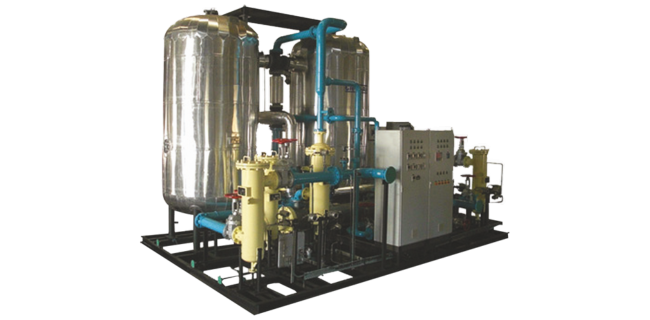
A regenerative split flow dryer is an adsorption-based compressed-air dryer that uses desiccant material to remove moisture from compressed air. The dryer typically contains two adsorbers, allowing one vessel to dry compressed air while the other undergoes regeneration and cooling.
The desiccant inside an adsorber captures water vapour as wet compressed air passes through it. Over time, the desiccant approaches its moisture-holding capacity and needs to be regenerated before it can continue drying efficiently. The second adsorber takes over the drying function while the first vessel is regenerated.
This alternating arrangement allows continuous dry-air production:
- One adsorber operates in the drying phase.
- The second adsorber undergoes regeneration.
- The regenerated adsorber is cooled and prepared for service.
- The two vessels change roles according to the control sequence.
The process repeats automatically to maintain continuous compressed-air drying.
How Does a Split Flow Dryer Work?
The operating principle combines adsorption with controlled regeneration. Wet compressed air first enters the drying side of the system, where it passes through the desiccant bed. Water vapour is retained by the desiccant, and the resulting dry compressed air continues toward the downstream system.
At the same time, the other adsorber is prepared for its next drying cycle. Regeneration removes the moisture accumulated inside the desiccant so that the material can be reused. Once regeneration and cooling are complete, the adsorbers switch functions.
The split-flow arrangement is important because the regeneration process can be managed without simply using a large quantity of already compressed product air as purge air. This can help reduce the compressed-air loss associated with regeneration and improve the overall efficiency of the drying system.
What Happens During the Adsorption Cycle?
During adsorption, wet compressed air enters an active desiccant vessel. The desiccant material has a strong affinity for water vapour, allowing moisture to be captured as air moves through the bed.
The quality of the drying process depends on factors such as inlet temperature, inlet pressure, airflow, moisture loading, desiccant properties, and contact time. If the operating conditions exceed the design parameters of the dryer, the desiccant may become saturated sooner than expected.
As the drying cycle progresses, the moisture loading of the active adsorber increases. The control system determines when the vessel needs to be taken offline for regeneration based on the dryer design and operating sequence.
How Does Regeneration Restore the Desiccant?
Regeneration removes the moisture accumulated in the desiccant during the drying cycle. Heat or another controlled regeneration method is used to drive moisture out of the desiccant so that the material can return to an effective adsorption state.
The regenerated vessel must also be cooled before it returns to the drying phase. If the desiccant is returned to service while it remains too hot, its moisture adsorption performance can be affected.
The complete regeneration sequence therefore involves:
- Removing accumulated moisture from the desiccant
- Controlling the regeneration conditions
- Cooling the regenerated desiccant
- Preparing the vessel for pressurization
- Returning the vessel to the drying cycle
The exact sequence depends on the dryer design and control system.
What Makes a No-Loss Split Flow Dryer Different?
A major consideration in desiccant drying is the amount of compressed air consumed during regeneration. Conventional heatless adsorption dryers can use a portion of dried compressed air as purge air. That air does not reach the production system, which represents a loss that must be considered when evaluating operating efficiency.
A no-loss split-flow design addresses this issue through a different regeneration arrangement. Instead of relying on a large continuous purge-air requirement, the dryer uses a controlled split of the available air and regeneration process to support desiccant regeneration while minimizing the loss of compressed product air.
This distinction matters because compressed air itself requires energy to produce. Reducing unnecessary air loss can therefore contribute to more efficient operation of the overall compressed-air system.
How Does the NLSF Dryer Reduce Purge-Air Loss?
The NLSF concept uses two adsorbers that alternate between drying and regeneration. During the regeneration phase, the system uses its split-flow arrangement to manage the air required for regeneration without depending on the same purge-air approach used by conventional heatless dryers.
The objective is to regenerate the desiccant while limiting the amount of compressed air diverted away from the downstream process. This can improve the usable output of the compressor and reduce the energy associated with producing replacement air.
The actual energy performance depends on the operating conditions, regeneration method, compressor characteristics, and control sequence. Dryer selection should therefore consider the complete compressed-air system rather than looking only at the nominal dryer capacity.
Regenerative Dryer vs. Refrigeration Dryer
A regenerative adsorption dryer and a refrigeration dryer remove moisture through different mechanisms. A refrigeration dryer lowers compressed-air temperature so that water vapour condenses and can be separated. An adsorption dryer captures water vapour directly using a desiccant material.
The choice depends largely on the required pressure dew point and process conditions. Refrigeration drying can be suitable where moderate moisture control is sufficient, while regenerative adsorption drying is appropriate where a lower dew point is required.
For systems evaluating alternatives, an RFQ refrigeration air dryer India option can be compared against adsorption technology based on airflow, pressure dew point, energy consumption, installation conditions, and lifecycle requirements.
What Factors Should Be Considered When Selecting a Regenerative Dryer?
Selecting a regenerative dryer requires a detailed understanding of the compressed-air conditions. The dryer needs to provide the required pressure dew point while operating reliably under the expected airflow and moisture load.
Important selection factors include:
- Required pressure dew point
- Compressed-air flow rate
- Operating pressure
- Inlet air temperature
- Ambient temperature
- Moisture loading
- Regeneration method
- Pressure drop
- Energy consumption
- Available installation space
- Control requirements
- Maintenance requirements
The pressure dew point should be established before selecting the dryer because it directly affects the required drying technology. Inlet temperature is also important because hotter compressed air carries a higher moisture load and can influence the performance of the desiccant bed.
Where Do Split Flow Dryers Fit in Industrial Compressed-Air Systems?
Regenerative adsorption dryers are suited to applications where compressed-air quality requires a lower moisture content than a standard refrigeration dryer can provide. They can be integrated into industrial compressed-air systems upstream of sensitive equipment or production processes.
Applications may include:
- Instrument air systems
- Pneumatic manufacturing equipment
- Process air systems
- Industrial automation
- Sensitive production processes
- Air systems requiring low pressure dew points
- Facilities with continuous compressed-air demand
The dryer should be positioned and configured according to the required air quality and system layout. Upstream filtration is also important because oil, liquid water, and particulate contamination can affect desiccant performance.
How Does a Desiccant Air Dryer Maintain Dry Air Quality?
A desiccant dryer relies on the condition of its adsorbent material, but the surrounding compressed-air treatment system also affects performance. Excessive liquid water, oil carryover, particulate contamination, or high inlet temperatures can place additional stress on the desiccant.
Proper filtration before the dryer helps protect the adsorption bed. For applications requiring standard adsorption drying, a desiccant air dryer supplier India can provide equipment designed around the required pressure dew point and operating conditions.
Routine monitoring should also include pressure drop, dew point, valve operation, cycle timing, and regeneration performance. Changes in downstream dew point can indicate that the desiccant, valves, filters, or control sequence require inspection.
Maintaining a Regenerative Split Flow Dryer
Regular maintenance helps preserve drying performance and prevents avoidable pressure losses. Filters should be checked according to operating conditions, while valves and switching mechanisms should be inspected because the dryer depends on accurate changeover between the two adsorbers.
The desiccant bed should also be monitored for signs of contamination, degradation, or excessive moisture loading. Control components should be checked to confirm that the adsorption and regeneration cycles are occurring at the correct intervals.
A maintenance program should include:
- Checking inlet and outlet filters
- Monitoring pressure dew point
- Inspecting switching valves
- Checking pressure drop
- Reviewing regeneration cycles
- Inspecting desiccant condition
- Checking control and alarm functions
Early detection of abnormal dew point or pressure drop can help identify performance issues before they affect downstream compressed-air quality.
Conclusion
A regenerative split flow dryer uses adsorption and controlled regeneration to remove moisture from compressed air while supporting continuous operation. The two-adsorber arrangement allows one vessel to dry compressed air while the other is regenerated and prepared for its next cycle. By using a split-flow regeneration concept, a no-loss system can reduce dependence on compressed-air purge and help limit avoidable air losses.
The right dryer depends on the required pressure dew point, airflow, operating pressure, inlet conditions, energy requirements, and downstream air-quality needs. Refrigeration dryers remain suitable for applications requiring moderate moisture control, while regenerative adsorption systems can provide deeper drying for applications with stricter dew-point requirements. For help evaluating compressed-air drying requirements and suitable equipment, contact Delair India Pvt Ltd.
5 FAQs About Regenerative Split Flow Dryers
1. What is a regenerative split flow dryer?
A regenerative split flow dryer is an adsorption-based compressed-air dryer that uses desiccant to remove moisture. Two adsorbers alternate between drying and regeneration so that dry compressed air can be produced continuously.
2. What does no-loss mean in a desiccant dryer?
No-loss refers to a regeneration arrangement designed to minimize the loss of compressed product air during the regeneration process. Reducing purge-air consumption can improve the overall efficiency of the compressed-air system.
3. Is a regenerative dryer better than a refrigeration dryer?
Neither technology is universally better. A refrigeration dryer may be suitable for moderate moisture control, while a regenerative adsorption dryer is generally selected when a lower pressure dew point is required.
4. Why does a regenerative dryer need two adsorbers?
Two adsorbers allow the dryer to maintain continuous operation. While one vessel removes moisture from compressed air, the other can undergo regeneration and cooling before returning to the drying cycle.
5. What should I consider before selecting a split flow dryer?
Consider the required pressure dew point, airflow, operating pressure, inlet temperature, moisture load, regeneration method, pressure drop, energy consumption, maintenance requirements, and available installation space.