ByJohn A
How Residential Steel Doors Improve Home Security and Durability
An exterior door serves as one of the main barriers between a home and the outside world. It must withstand regular use, changing weather, and attempted forced entry while remaining practical for everyday access. Residential steel doors offer a strong option for homeowners who want a durable entrance with reliable security features.
Their performance depends on more than the metal itself. Door construction, frame strength, locking hardware, installation quality, and weather protection all influence how well the complete assembly performs. Understanding these factors helps homeowners choose residential steel doors that meet their property’s security and durability needs without sacrificing appearance or convenience.
Steel Construction Provides Strength
Steel is widely used in door construction because it can provide substantial strength in a relatively compact profile. Residential steel doors often consist of a steel outer skin surrounding an internal core, with the exact materials and construction varying by manufacturer.
The outer surface helps resist everyday knocks, while the internal structure contributes to rigidity and overall performance. Some models use insulated cores that also support thermal and acoustic performance.
However, not every steel door offers the same resistance to damage. Steel thickness, reinforcement, edge construction, and manufacturing quality make a difference. A well-built door should be evaluated as a complete product rather than judged solely by its material.
Homeowners should request product specifications and, where security is a priority, evidence of testing against relevant standards.
Stronger Entry Points Can Improve Home Security
Exterior doors are important components of a property’s security arrangements. A weak door, poorly secured frame, or basic lock can create an opportunity for forced entry even if the door panel itself is strong.
Steel doors can provide a firm foundation for a more secure entrance when combined with appropriate hardware and installation. Reinforced lock areas may help the door withstand the forces associated with attempted entry, while suitable hinges and frame fixings help keep the assembly securely in place.
Useful security features to consider include:
- Multi-point locking systems that secure the door at several positions.
- Reinforced areas around the lock and handle.
- Secure hinge arrangements suited to the door’s design.
- Strong frame fixings anchored into appropriate structural material.
- Tested door assemblies where certified security performance is required.
The exact combination should reflect the property’s location, access points, and applicable building requirements. No single feature guarantees complete protection, and security ratings should be checked against the intended application.
The Door Frame Deserves Equal Attention
A strong door panel cannot deliver its full benefit if the surrounding frame is weak or incorrectly installed. During a forced-entry attempt, pressure can be applied to the frame, hinges, lock area, and points where the door meets the opening.
The frame should be compatible with the door and designed to support its weight and locking arrangement. Appropriate fixings must connect it securely to the surrounding structure.
Installation also affects the alignment of the latch and locking points. If the door is poorly fitted, it may fail to close correctly or place excessive pressure on the hardware. These issues can reduce convenience and compromise the intended security performance.
Homeowners replacing an existing entrance should ask the installer to inspect the condition of the opening, not simply fit a new door into the existing frame without assessment.
Resistance to Everyday Wear
An entrance door is exposed to repeated opening, closing, deliveries, children, pets, and accidental impacts. A suitable steel door can withstand many of these demands, making it a practical option for busy households.
Steel does not split or crack in the same way as some timber constructions under ordinary use, although it can dent when subjected to a sufficiently strong impact. The severity of damage depends on the panel design, steel thickness, and internal support.
A quality finish helps protect the outer surface and maintain its appearance. Depending on the model, finishes may include factory-applied paint or a durable coated surface in several colours.
Homeowners should still avoid striking the door with heavy objects and should repair coating damage promptly if the exposed metal is at risk of corrosion.
Insulation and Indoor Comfort
Security is only one consideration in residential door selection. An exterior entrance also separates the indoor environment from outdoor temperatures and noise.
Many steel doors incorporate an insulated core that reduces heat transfer through the panel. The effectiveness of the complete door depends on the core material, edge construction, frame, glazing if present, and perimeter seals.
Weatherstripping helps reduce unwanted air movement around the closed door. A properly fitted threshold and suitable sealing arrangement can also limit draughts and the entry of dust or moisture.
For better energy performance, review the door’s thermal ratings rather than assuming that all steel doors provide the same level of insulation. The surrounding wall and installation details matter as well.
An insulated door can contribute to indoor comfort, but it cannot compensate for significant gaps or poor sealing around the entrance.
Managing Moisture and Preventing Corrosion
Steel is strong, but exposed metal can corrode if moisture reaches unprotected areas. Modern residential steel doors generally use coatings and finishes intended to protect the surface, yet damage, neglected maintenance, or unsuitable environmental conditions can affect that protection.
Inspect the door periodically for scratches, peeling paint, dents, and corrosion around the lower edge. Pay particular attention to areas near the threshold, where water and dirt may accumulate.
Clean the surface with products approved by the manufacturer. Avoid abrasive tools that could remove the protective finish. If the coating becomes damaged, use an appropriate repair system rather than leaving bare metal exposed.
Properties in humid or coastal locations may require products with suitable corrosion protection and more frequent inspections. The manufacturer’s recommendations should guide maintenance in these environments.
Style Options for Different Homes
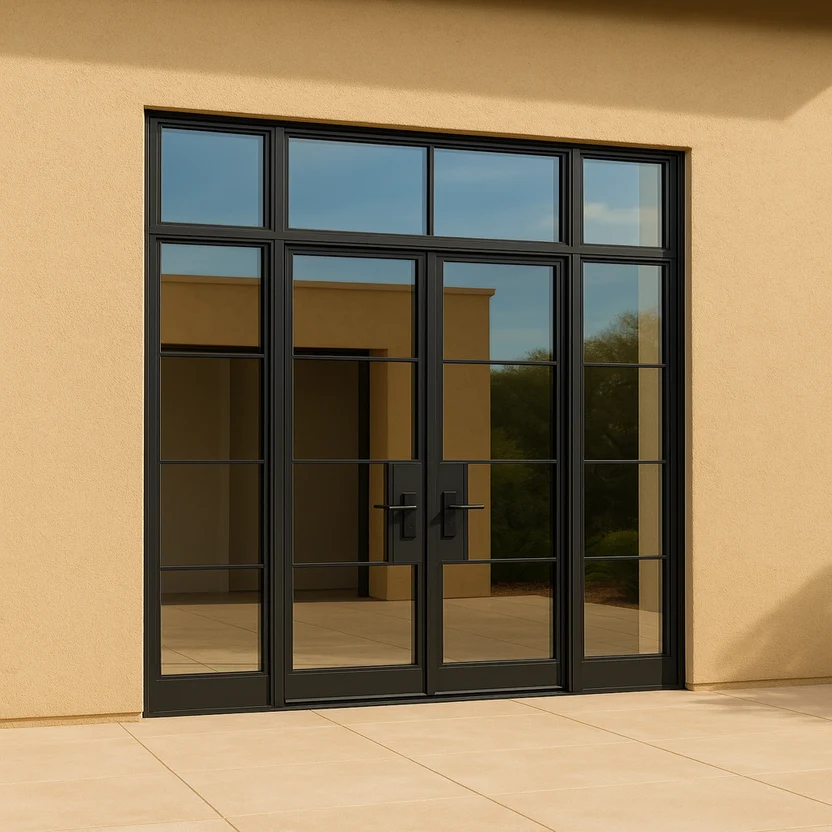
Steel doors are available in designs that suit traditional and contemporary properties. Simple flat panels work well with minimalist architecture, while decorative mouldings, glazed inserts, and different colour finishes offer additional choices.
A dark finish can complement modern exterior cladding, while lighter colours may suit homes with traditional brickwork or rendered façades. Decorative glass can introduce daylight into an entrance, although its security, privacy, and insulation properties should be considered carefully.
The surrounding architecture should guide the choice. A front door is a prominent exterior feature, so its proportions, hardware, and colour should work with nearby windows and other finishes.
Homeowners should also confirm that decorative options do not compromise the required security or thermal specifications.
Maintenance Requirements Over Time
Steel doors are generally straightforward to maintain, but their hardware and protective finish still need attention. Periodic cleaning prevents dirt from building up, while inspections can identify loose handles, worn seals, and alignment problems.
Locks should operate smoothly, and the door should close without excessive force. If the panel rubs against the frame or the latch no longer lines up, a qualified installer can assess the cause.
Weather seals may need replacement as they age. Maintaining them helps limit draughts and reduces the chance of water entering around the edges.
Keep the manufacturer’s documentation for reference, particularly if replacement hardware or finish repairs become necessary.
Making a Suitable Investment
The price of a residential steel door depends on its construction, insulation, finish, hardware, dimensions, and tested performance. Comparing quotations on price alone can overlook differences that affect long-term value.
Ask suppliers about security testing, corrosion protection, warranties, maintenance requirements, and installation standards. Confirm whether the quotation includes the frame, locking hardware, removal of the old door, and finishing work.
A well-selected steel door can provide a durable entrance and contribute to a home’s security for years. Its benefits are strongest when the panel, frame, locks, seals, and installation are designed to work together.